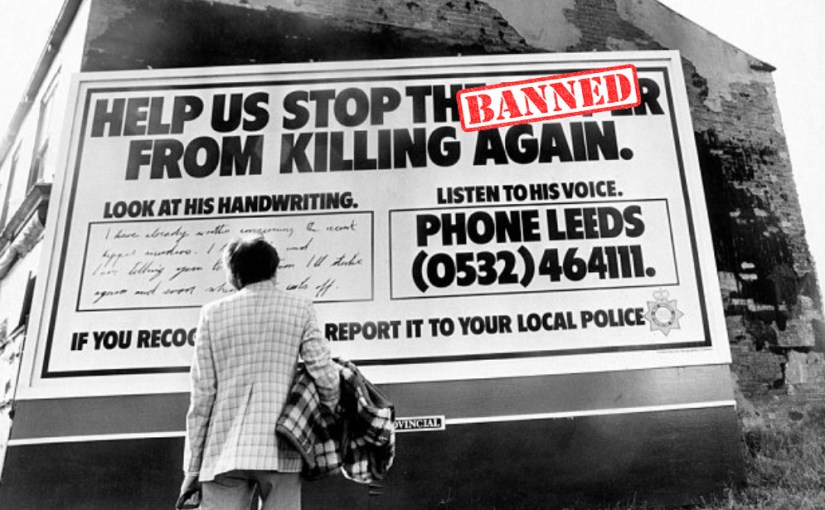
Sensationalist spin, glorified untruths, and life-destroying headlines – sadly, all part of our societal fabric thanks to the British mainstream media. We are so used to it, most of us are immune, but what happens when the bold headlines go from simply causing shockwaves and drama, to being directly responsible for death, or even multiple deaths? Well, nothing, apparently.
From as early as I can remember, I’ve been angered by vile press behaviour. So much so, that as a kid living with my parents – who took daily delivery of a certain red top – I vowed that whenever I had my own house, those rags would never be allowed over my doorstep. I’ve been a homeowner now for thirty-one years, and not a single tabloid has ever crossed the threshold.
But some people fail to understand why I get so riled – it’s just the press being the press, right? Well, no. In some cases, it goes way beyond their questionable morals and lack of respect. Sometimes, the language they choose to use has seismic ramifications; and when that happens, it needs calling out.
Monikers for serial killers are often conjured up by the press as a platform for dramatic headlines, artless alliteration, and a means of dragging the public into an editorial soap opera; its daily episodes playing out across the pages, making sure we can’t wait to rush out to buy tomorrow’s copy.
As harmlessly entertaining as it might appear to make up quirky names for psychopaths, these monikers carry the most dangerous weight. In this particular case, I am of course referring to the ‘YR’. A moniker so vile you won’t find it written in full by me anywhere on my blog. And once you’ve examined the damage it has done over the years (and continues to do), hopefully, you’ll join in the mission to get its usage vastly reduced, if not eliminated altogether.
There are six key areas for analysis:
- When and why the name was chosen
- Why the moniker is misguided
- What a moniker does for the killer
- What a moniker does for public perception
- How the moniker was responsible for deaths
- Effects on family and ongoing repercussions
Given the multiple layers involved in this particular analysis, I’ll split it into two parts, with this part looking at the first three points.
When and why the name was chosen
The press decided, very early on, that the attacks happening across the North of England were reminiscent of those carried out by a killer targeting prostitutes in Whitechapel, London in 1888. On 25th Sept 1888, police received a letter (which came to be known as Dear Boss – more on this in a future analysis), from an anonymous author purporting to be the killer. In it, he stated, ‘I am down on whores and shan’t quit r***ing them …’ He then signed himself off as Jack the R.
The earliest reference I can find to Sutcliffe being likened to ‘The R’ was in the Wolverhampton Express and Star, on 24th January 1976. The article had been triggered by the murder of Emily Jackson on the 20th. In it, the perpetrator is referred to as a ‘Jack-the-R-style killer’. And here’s the important part – at this point, only two attacks were being linked: Emily’s, and that of Wilma McCann, both of whom were assumed to be prostitutes. But whilst Emily’s story would suggest she had sadly resorted to prostitution to make ends meet for her family, there was never any evidence to suggest Wilma was a prostitute. In ‘those days’ it seemed any woman seen to be doing anything other than housework, was judged and labelled, regardless of whether the assumptions had any foundation. This recurring issue will also be covered in a future analysis.
According to Michael Bilton in his book Wicked Beyond Belief (the widely acknowledged ‘bible’ of the Sutcliffe case, and the book on which ITV’s The Long Shadow was based), the press added the prefix ‘Yorkshire’ in 1978 following the murder of Helen Rytka, to more accurately pinpoint the killer’s preferred stomping ground. But that date didn’t sit right with me: 1978 seemed too late in Sutcliffe’s killing spree, and it felt like the name had been around earlier than that. As a proofreader I’m trained to question everything – so I started digging. Sure enough, a scout around the British National Archive uncovered earlier references to the YR moniker. The earliest example I could find, was in the Daily Mirror on Monday 11 July 1977, after the attack on Maureen Long. Maureen was also not a prostitute, but by then it was too late – the catchy little title had stuck.
Why the moniker is misguided
Unsurprisingly, this boils down, yet again, to the case trademark: linkage blindness.
In November 1974, Gloria Wood survived an attack in Bradford; she was a teacher. In July ’75, Anna Rogulskyj survived an attack in Bradford; she worked in Woolworths. In August ’75, Olive Smelt survived an attack in Halifax (forty minutes from Bradford); she was a cleaner. Less than two weeks later, Tracy Browne survived an attack in Bradford; she was a 14-year-old schoolgirl. In January 1976, just two weeks before Emily Jackson was killed, Rosemary Stead survived an attack in Bradford; she worked in a supermarket.
All five of these women – without exception – were struck on the head with a hammer or similar object. All within the same geographical area, all within fourteen months of each other. Why no link? To add insult to injury, the SIO on the Rosemary Stead attack, was DCI Denis Hoban, who was also the SIO for Wilma and Emily; so even senior officers working across more than one attack, were not linking them. To recap: seven very similar attacks, yet only the two who were assumed to be prostitutes were being linked. It makes absolutely no sense to me.
The creation of the moniker was highly irresponsible on the part of the press, but they made the comparison purely on the basis that the message being put out by police was that only Wilma and Emily – the supposed prostitutes – were killed by the same man. I’ve mentioned before that hindsight cannot and does not explain away some of the errors that were made in this case. To my mind, this was possibly one of the earliest blunders. By not linking the early attacks, the police encouraged the moniker, which further solidified an inaccurate (not to mention offensive and harmful) narrative. Even when Sutcliffe’s rampage was in its infancy, the clues were transparent – hindsight doesn’t come into it. Jack the R’s victims were typically women who worked as prostitutes. Sutcliffe’s victims were typically … women.
More exasperating still, is that witnesses to the Rosemary Stead attack gave a description of the attacker. He was 25-30 years old, 5’9” tall, slim, with dark hair, moustache and a beard. Indeed, one description does not a link make, but what if I tell you that Olive Smelt described her attacker as 30 years old, slightly built, with dark hair and a beard? And schoolgirl Tracy Browne had also given a thorough description of her attacker, resulting in the following photofit:
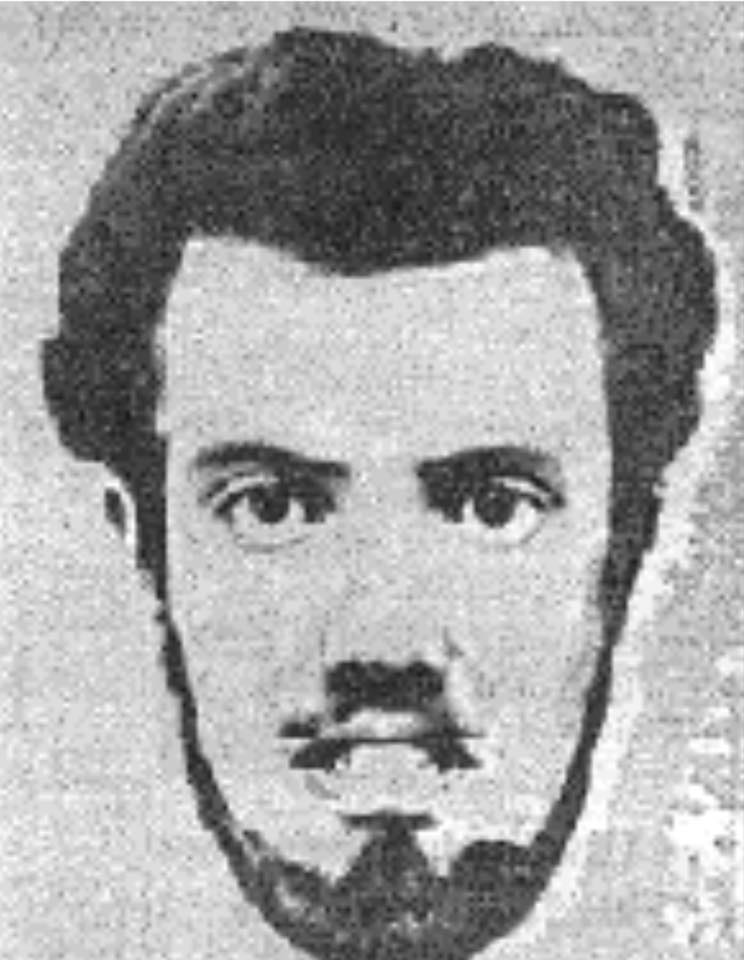
Now do you see my point? No hindsight required; the evidence was already building – and yet, the police had by now closed their eyes and minds, and the press clung on for the ride. Neither the Jack comparison, nor the moniker, should ever have happened.
What a moniker does for the killer
First and foremost, it feeds their ego.
In her podcast The Crime Analyst, Laura Richards, a criminal behavioural expert formerly of New Scotland Yard, discusses in detail the typical traits of a psychopath, many of which Sutcliffe exhibited. One major trait in most cases, is narcissism.
narcissism / nɑːsɪsɪz(ə)m / noun: the habit of always thinking about and admiring oneself. Those suffering from narcissism are often self-absorbed or chronic exhibitionists
IN PSYCHOLOGY: selfishness, involving a sense of entitlement, a lack of empathy, and a need for admiration
Sutcliffe’s MO was all about power. He would always incapacitate his victims with a blow to the head, rendering them powerless, on the floor, and if not unconscious, certainly seriously injured and confused by what was happening to them. The power fuelled him. The notoriety that comes with a moniker serves to empower a killer further: it emboldens them, and plays straight to the core of their narcissism. It makes them feel noticed, feared, and famous. Imagine what this would have done for Sutcliffe’s ego. At a time when he should have been feeling like the depraved, cowardly deviant that he was, he was being cemented in history with all the other infamous killers; given a public persona, and seeing his ‘name’ all over the papers and TV: a misleading name; a name that shielded him and kept him safe.
This goes one step further in almost absolving the killer of guilt; enabling Sutcliffe to remove himself from the reality of what he was doing. In his confession statement on 4th January 1981, Sutcliffe said:
When the R came up in conversation at work or in a pub, I was able to detach my mind from the fact that it was me they were talking about, and I was able to discuss it normally. It amazed me at times that I was able to do this.
Furthermore, this particular moniker – a direct comparison to a killer of prostitutes – afforded Sutcliffe the luxury of attacking multiple women who were not prostitutes, with no fear of those attacks being linked to the series. Police and press alike played right into his hands, and he made the most of it; to the detriment of the women whose lives he destroyed.
In Part 2 of this analysis we will look at:
- What a moniker does for public perception
- How the moniker was responsible for deaths
- Effects on family and ongoing repercussions
 Criminal Sentences