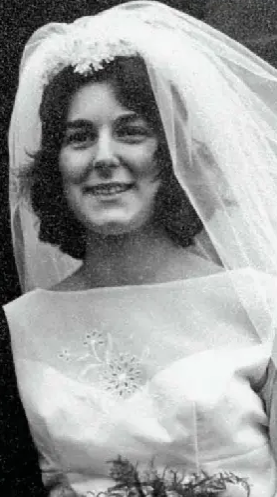
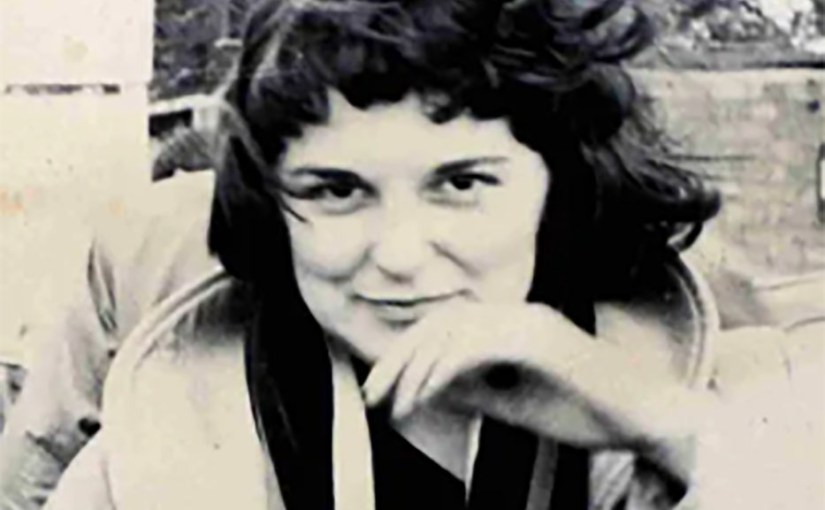
During my research for The Odd Female blog series, I became acquainted with so many women who are an unfortunate part of the awful Sutcliffe story. But, due to the fact that I currently live in Derbyshire, one of the women in particular piqued my interest. Her name was Wendy Sewell.
Wendy was attacked at around noon in Bakewell Cemetery on Wednesday 12th September 1973, and sadly died from her injuries in Chesterfield Hospital, two days later, aged 32. In a cemetery overlooked by houses, in broad daylight, there was apparently not one single eye witness. Some police officers believed at the time (and still do) that Wendy had been a Sutcliffe victim. Having done extensive research on both Wendy and Sutcliffe, I disagree.
At the time, 17-year-old local lad Stephen Downing had been working as a groundsman at the cemetery, and after returning from his lunch hour on that fateful day, he discovered Wendy lying semi-conscious across the gravestones.
What followed, was one of the biggest miscarriages of justice in British criminal history. Stephen, who, at the time, had learning difficulties, was forced into making a false confession by officers wanting a quick conclusion to the case. Locals who knew both Wendy and Stephen, remained unconvinced of his guilt; but he was, nonetheless, charged and detained at Her Majesty’s Pleasure in 1974.
Some years later, Matlock reporter, Don Hale, began a years-long campaign to get Stephen released (Further reading: Murder in the Graveyard by Don Hale (2019, Harper Collins)). A breakthrough in Don’s research led to Stephen’s conviction being overturned in 2002. Stephen was released after serving 27 years for a murder he did not commit.
But where did this leave Wendy?
Grave Hunting
Amongst the media furore surrounding Stephen, Wendy had somehow been forgotten. And so, I went on a mission to find her. Some people might find this macabre, but my search for Wendy was born from respect, not morbid curiosity.
I visited Bakewell regularly, so one afternoon, I started my search there. I spent some time in Bakewell Cemetery, following Wendy’s last-known movements along the footpath to the secluded spot where she is thought to have met with a ‘man-friend’. Stephen found Wendy soon after, lying on top of a grave in the name of Anthony Naylor. In the time it took Stephen to go and fetch help, Wendy had dragged herself across the cemetery, to the grave of Sarah Bradbury.
Just being in the vicinity, knowing what had happened, and letting my mind’s eye cast back to Wednesday 12th September 1973, was, I admit, massively moving. That poor girl must have been terrified.
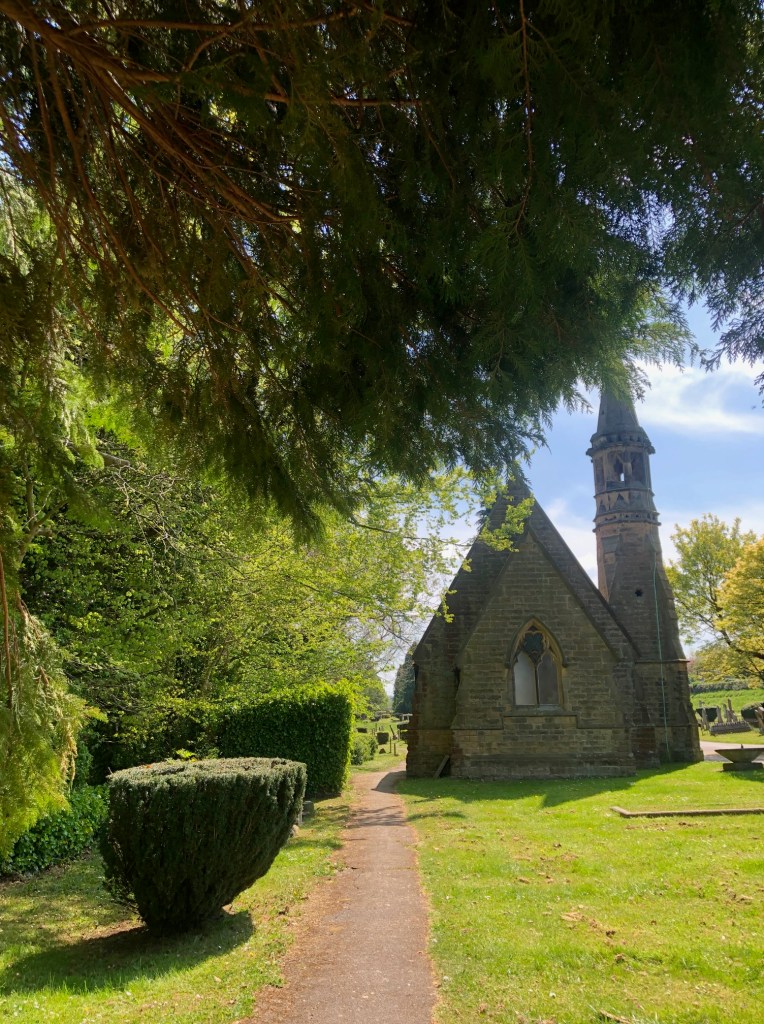
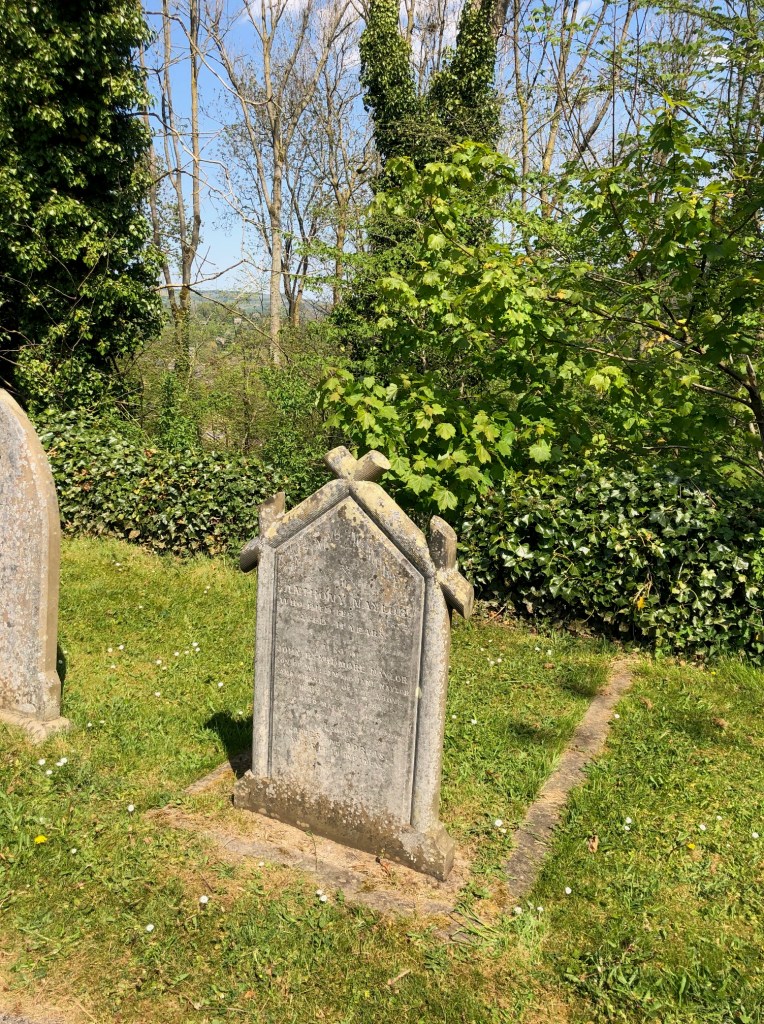
Various people arrived on the scene, but it was over an hour before any one of them had the common sense to call an ambulance. An unforgivable delay that may very well have cost Wendy her life.
And yet, in a case so deserving of public sympathy, humanity, and respect, Wendy received none. Instead, the press excelled themselves yet again, by referring to her in all of their headlines, as ‘The Bakewell Tart’. Vile.
The more of this childish vitriol I read, the more connected I feel to these women; to the forgotten victims. To Wendy.
Local Knowledge
The cemetery caretaker was sitting in his van having a sandwich, so I wandered over and asked him if he knew about the case, and whether Wendy was buried here in Bakewell. He was clued up on the case (I get the impression most locals are), and said as far as he knew, Wendy wasn’t there. We both agreed it would have been fairly crass for her to have been buried in the place where she was killed, and he suggested she may be at Middleton-By-Youlgreave, where she’d lived with her husband. The info was duly noted. He then offered to ring a few contacts and ‘ask around’. He spent half an hour on the phone for me, but still no sign of Wendy.
An Unexpected Encounter
On one particular visit to Bakewell, I felt compelled to question a few more of the locals about the case, and find out what they knew of Stephen Downing’s whereabouts.
I parked my car on Burton Edge, the residential street overlooking the cemetery, and made a beeline for a gent who was unpacking the boot of his car. He looked about the right age to have remembered the case.
He was happy to chat, so I asked him if he knew whether Stephen Downing still lived close by. “Yes,” he said. “Very close.”
I became animated. “So I’m in the right ballpark?” I asked.
“Yes,” he said again.“It’s me.“
Surreal
I’m not sure whether I did a good job of hiding my reaction or not, but it felt as if Stephen would have seen my goosebumps from a mile away.
Knowing what this man had been through in his life, and seeing him now as an unassuming, bespectacled almost-70-year-old, pottering around in the back of his Ford Mondeo Estate, was virtually impossible to compute.
He was polite, and notably eloquent. I asked him about his learning difficulties as a young adult, and mentioned that I’d read Don Hale’s book, which laid out some of the beautifully written letters Stephen had sent to Don from prison. He smiled, and told me that because he had spent so many years surrounded by lawyers, he had learned his language and grammar from them. This was not a man lacking intelligence; far from it. (Further reading: The Case of Stephen Downing: The Worst Miscarriage of Justice in British History by Stephen Downing (2021, Pen and Sword True Crime)).
He shared some details of his life with me, and I asked him if he knew where Wendy was. Straight away, just like the caretaker, he said Middleton-by-Youlgreave. My next trip now seemed obvious.
I’m pleased to say that Stephen and I swapped numbers, and we have shared numerous coffees since. I feel strangely protective of him, and have his permission to write more about his life in a future blog.
Still No Sign
Middleton-By-Youlgreave is one of Derbyshire’s many ‘chocolate box’ hamlets. So tiny, in fact, that it doesn’t have its own cemetery, and my visit yielded no results. A couple of the residents suggested I try Youlgreave: the next village along, which did have quite a large cemetery. So off I went.
After two hours of fruitlessly squinting at fading headstone inscriptions, I called time on it, and returned home to hit Google.
I sent a multitude of emails to different local parishes. Everyone I spoke to had a different opinion on where Wendy might be; I was going around in circles, and it was starting to feel like I would never find her.
Lightening-Bolt Moment
It was during one of my marathon emailing sessions on Thursday 24th July, that I had a sudden revelation. For the purposes of my blog research, I remembered that I was subscribed to the British Newspaper Archive. I logged on.
After a couple of unsuccessful searches of the main news archive, it dawned on me that searching under ‘Family Notices’ might prove more fruitful.
And there it was, in all of its sad, symbolic glory. A family announcement giving the date, time and location of Wendy’s funeral service and interment. At last, I’d found her.
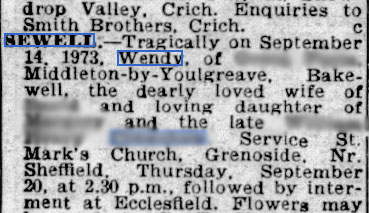
All-Important Details
Wendy was buried in Ecclesfield Cemetery in Sheffield, just 50 minutes away from me. I had to visit – there was no question. But, the size of the cemetery hadn’t gone unnoticed, so I emailed the church office to see if they had a plan of the gravestones. The recipient of my email forwarded my enquiry to Mr Peter Lonsborough, the editor of the church magazine.
Peter was brilliant. He did some searching of his own, and had yet another breakthrough: a plot number for Wendy. This information was huge, but without a plan of the graveyard, she would still be hard to find. Peter suggested Sheffield City Archives. I emailed them, and within minutes they sent me a plan, showing where each plot number was located. Meanwhile, unbeknownst to me, Peter’s partner, Kath, had popped across to the cemetery herself, and found Wendy. They sent me a photo, so that I knew exactly where to look. I was speechless.
Paying My Respects
I visited Wendy on Sunday, 27th July 2025; almost 52 years after she died. I tidied up her weary headstone, sat quietly with her for a few moments, told her she was not forgotten, and left her some fresh flowers.
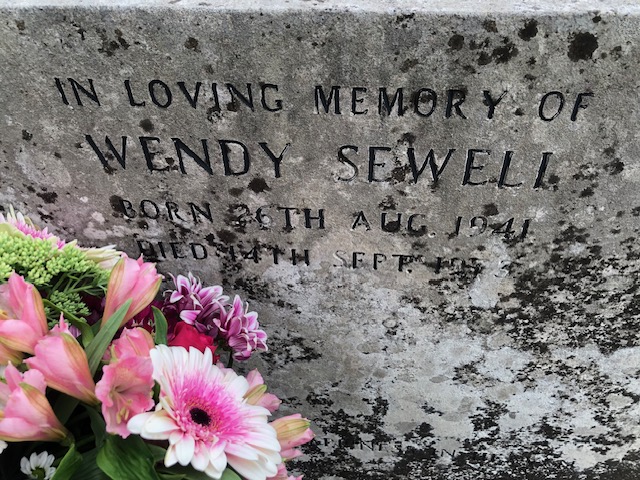
I’m not sure whether Peter and Kath will ever truly appreciate the gravitas of their help and kindness, but they didn’t just help me to find Wendy. No one has ever been brought to justice for taking her life, and so by remembering her, we also remember all of the women, from across the decades, who wait patiently; anonymously; for some unexpected quirk of fate to bring their story back into the spotlight.
Her name was Wendy Sewell.