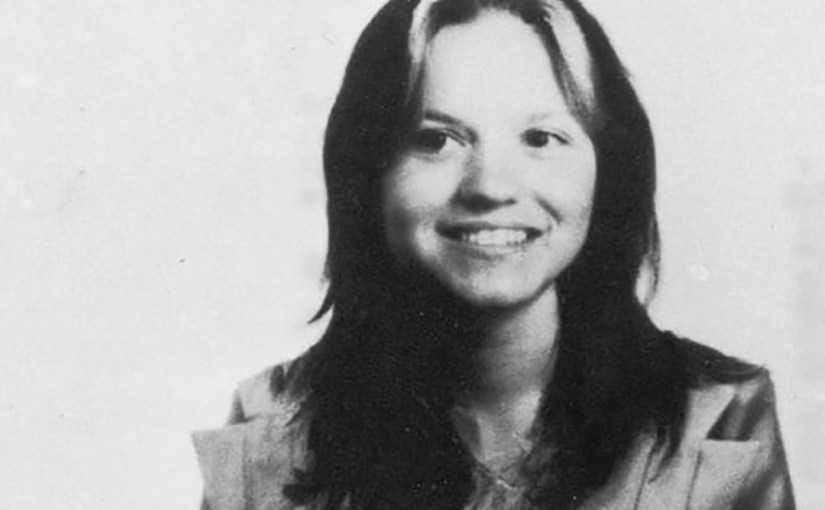
In the early hours of Sunday 26 June 1977, Peter Sutcliffe took the life of 16-year-old schoolgirl Jayne MacDonald, who had been walking home in the Chapeltown district of Leeds, after a Saturday night out with friends. Her mutilated body was discovered by children in a playground just before 10am the same morning.
Jayne, pictured, had worked as a shop assistant, and lived with her parents on Scott Hall Road, a few doors down from Wilma McCann; she had frequently baby-sat Wilma’s children.

By now, police were still only linking four previous attacks: Wilma, Emily Jackson, Irene Richardson and Patricia Atkinson, all of whom were apparently involved in prostitution. Police were not linking four other attacks throughout ’75 and ’76, which the victims, none of whom were prostitutes, survived. Sutcliffe later confessed to all four of them.
DCS Denis Hoban was the senior investigating officer in the attacks on Wilma and Emily. He was interviewed at the scene where Emily was found, and went on record saying: “We’re quite certain this man hates prostitution. I’m quite certain that this even stretches to women who go in public houses and clubs, of rather loose morals, who aren’t necessarily prostitutes.”
DCS Jim Hobson backed this up with: “He has made it clear he hates prostitutes. Many people do.”
What strikes me here, is that the police NEED the public to help. The public are witnesses, and no one is coming forward. But instead of supporting the women publicly, and making them matter, what the officers actually do, is come dangerously close to justifying the killer’s actions; Jim Hobson is teetering on the edge of, “Frankly, who can blame him?“
What’s more, both officers are clearly aware of the precarious position these women are in when it comes to public perceptions. For a start, Hoban acknowledged that women who went to pubs alone were judged to have ‘loose morals’. Men visited pubs alone all the time, with no such judgement. Emily Jackson’s husband, for example, went to the pub on his own while he waited for his wife to earn extra cash with a punter (Sutcliffe). Oh, the screaming irony of it. Yet, the scrutiny of his reputation and moral standing is nowhere to be seen, despite him failing so miserably as a father and husband that he resorted to suggesting his own wife earn money by selling sex, rather than trying harder to find work himself.
Not only was Hoban peddling a ragingly misogynistic double standard, but he was also reinforcing the rhetoric that the victims weren’t worthy of sympathy, or that they somehow brought this on themselves. Secondly, Hobson asserted that many people hate prostitutes. So, if the police were so overtly aware of these preconceptions, was it not up to them to reinforce a more positive image of the victims in order to encourage more public engagement? Is that not just fairly basic people management?
A national ‘groundswell of attention’
Until Jayne, all news of the killings had been regional; Jayne’s murder was the first of the series to elicit national interest, provoking what was described as a ‘groundswell of attention’: attention that had not been forthcoming when everyone thought he was ‘just killing prostitutes’.
On Brian Walden’s Weekend World, reporter Hugh Pile commented that “Her death stirred Chapeltown from its apathy”. And it was this casual mention of apathy that caused me to consider, in more depth, society’s attitude toward prostitutes, and the general lack of outcry over their murders. Afterall, they’re human beings, with a story, just trying to get through life like the rest of us. But why on earth would you chose a job like that? Surely, it’s asking for trouble…
If that’s what society thinks, then at the very least, society would benefit from a little education. The reasons for women falling into prostitution have hardly changed since the ‘profession’ began, and when you look harder, it’s clear that many of these women are amongst our most vulnerable, and they find themselves in a lot of these situations as a direct result of male domination or toxicity:
- Poverty / children to feed / absent fathers
- Debt / financial pressures
- Homelessness
- Addiction
- Abuse / coercion / force / control
- Trafficking
- Poor education
- Lack of employment opportunities
And let us not forget simple supply and demand. Of the 105,000 people in the UK involved in prostitution, 96% are women, with almost ALL of the people buying sex, being men. Streetlight UK is a charity committed to helping women find their way out of prostitution. Their CEO, Helena Croft, MBE, says:
Prostitution is often called the world’s oldest ‘profession’ – but it is NOT a career choice. No little girl ever dreams of growing up to do this.
And in his 2012 book, Legalizing Prostitution: From Illicit Vice to Lawful Business, sociologist Ronald Weitzer pointed out:
Why would anyone choose that as a job, if there were any other feasible options?
So why does society take the moral high-ground regarding these women, when their situation is most likely not born from choice? How about we reserve judgement until we’ve walked a mile in their shoes? And when it comes to murder, are they not deserving of as much respect as those victims who’d been fortunate enough to have never been forced into selling sex? It shouldn’t even be up for discussion.
Tired cliches like ‘well, it was the 70s’ and ‘things were different then’ do not excuse the attitudes that followed the death of Jayne MacDonald. For the police and the press to both embark on such a public display of victim blaming, was every bit as wrong then, as it is now.
When it comes to being murdered, no one asks for it. All those women were asking for, was a fiver from a random man in return for what he wanted. A fiver, to put towards the kids’ school lunches, or the rent, or the gas bill. That’s all they were asking for.
Sutcliffe didn’t attack prostitutes because he hated them. He attacked them because they were easy pickings: women who would willingly go with him to a secluded spot. They were vulnerable; and he was a coward.
Enter Oldfield
At this point, the Head of West Yorkshire CID, ACC George Oldfield, was brought in to lead the investigation, and things did indeed become a little more proactive. It’s just a shame it took five murders to trigger them into action.
Keep in mind here, that four of Sutcliffe’s eight victims prior to Jayne, had not been prostitutes. So that’s an even split. Yet still, police followed their own narrative, and on that basis, George Oldfield branded Jayne’s murder a ‘terrible mistake’. Jayne was, after all, innocent. And so it starts.
With the help of the Yorkshire Post, Oldfield released an open letter to the killer; it read:
You’ve killed five times now. In less than two years you have butchered five women in Leeds and Bradford. Your motive it is believed is a dreadful hate for prostitutes: a hate that drives you to slash and bludgeon your victims. But inevitably, that twisted passion went terribly wrong on Sunday, an innocent 16-year-old lass: a happy, respectable, working-class girl from a decent Leeds family, crossed your path.
How did you feel yesterday when you learned that your bloodstained crusade against streetwalkers, had gone so horribly wrong? That your vengeful knife had found so innocent a target.
Sick in mind though you undoubtedly are, there must have been some spark of remorse as you rid yourself of Jayne’s blood stains.
Is it not time for you to seek help, to call a halt to your slaughter, before another Jayne falls to your knife?
Someone, somewhere in this city, probably knows your secret. A wife, a mother, a sister. People whose love for you keeps their lips sealed. Must they too carry your burden?
Your infamous predecessor, Jack the R*, carved his victims in London’s gas-lit streets in the 1880s. Unlike the R*, no rope awaits you, only understanding treatment in spite of the ghastliness of your crimes.
If there are to be no more Jayne MacDonalds on your growing list of victims, now is the time to end your vengeance and seek help for yourself. If you wish to unburden yourself, to free yourself and possibly your family from the frightening shadows you have cast, you need only to pick up a telephone. The numbers to ring, are Leeds 454197 or Leeds 454173. Talk to the police. They are ready to help.

There are three main points to address. Firstly, did you notice who the letter suggested may be keeping the killer’s secret? ‘A wife, a mother, a sister.’ No suggestion of a culpable father, brother … or best friend? Because Sutcliffe’s best friend, Trevor Birdsall, was indeed keeping his secret. He had even waited for Sutcliffe in the car, during two attacks.
Secondly, there are numerous reinforcements of the prostitute theory, and the suggestion that in his killing of Jayne, the campaign had “gone so horribly wrong”. The letter also compares him openly to Jack, whose victims were all prostitutes.
This reinforces the idea that Jayne’s murder is more abhorrent than the previous four, and even goes as far as to suggest that hers is the only murder which should garner remorse from the killer.
It strikes me that a narcissist like Sutcliffe might even interpret this as the police being ‘on his side’. In fact, after his confession on Sunday 4th January 1981, he went on to tell police, “The women I killed were filth. Bastard prostitutes who were littering the streets. I was just cleaning up the place a bit.” Was he implying some kind of sick social solidarity?
It was a few weeks later when Sutcliffe conjured up the story that ‘the voice of God’ had told him to kill prostitutes. The police had most definitely handed him his insanity plea on a plate.
My third point is in regard to what I consider one of the most disturbing elements of the letter.
Twice, Oldfield uses Jayne’s name as a noun to describe potential future victims:
Is it not time … to call a halt to your slaughter, before another Jayne falls to your knife?
If there are to be no more Jayne MacDonalds on your growing list of victims …
I’d suggest this was a deliberate tactic: the constant use of her name might drive home that she was a real living person, and using it in reference to future victims made them appear more real too. It might make Jayne, and those potential victims, more relatable in the hope of teasing out some level of humanity from the killer.
But this falls short in two ways. First of all, his appalling choice of words insinuates that Jayne’s is the only type of murder we don’t want to see repeated: that Jayne represents a group who didn’t deserve to die, as opposed to the group that did. And secondly, the letter came after four previous attacks on women who weren’t prostitutes – so he was appealing to a sensibility that the killer simply did not possess.
Special Notice
On 13th September 1979, just a few days after the murder of Sutcliffe’s 11th victim, Barbara Leach, George Oldfield issued a Special Notice entitled ‘Murders and Assaults Upon Women In The North Of England’ to police forces nationwide. It profiled all of the victims and gave specific details of their attacks; the intent being to share the perpetrator’s MO, so that other forces could be on high alert for similar activity in their own jurisdictions.
Within this Notice, even the most mild-mannered of women couldn’t escape having her character besmirched in the most disrespectful way. Olive Smelt had been 46 at the time of her attack in August 1975. She had been married to Harry for 27 years, they had 3 children aged 25, 15 and 9, and Olive held down three cleaning jobs for different companies local to her home in Boothtown, Halifax.
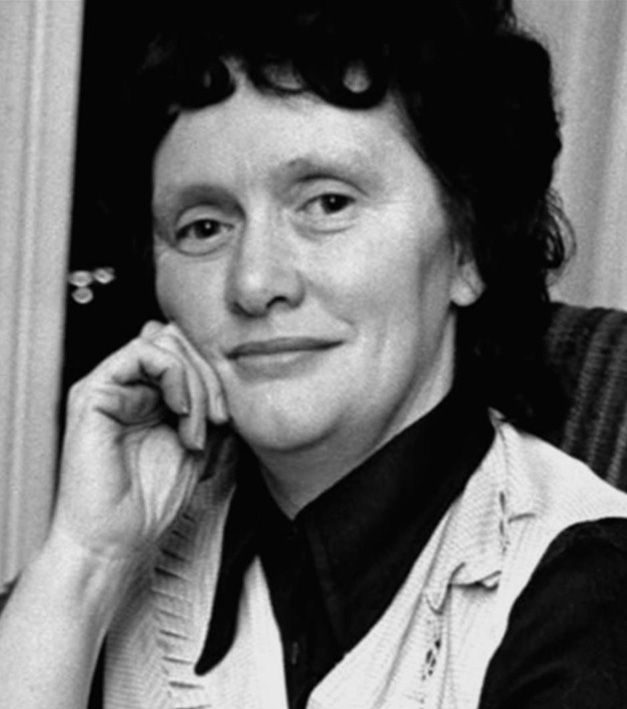
Olive had been out for a drink with a girlfriend on the evening of Friday 15th August 1975, when she was approached by Sutcliffe as she walked home. He engaged her in conversation about the weather before attacking her with a hammer and slashing her across her lower back. He was interrupted by car headlights and ran off, leaving Olive lying in the street, just yards away from her house. She was rushed to hospital with two fractures in her skull. Olive survived her attack and gave the SIO, DCI Dick Holland a very accurate description of her attacker and confirmed he had a Yorkshire accent.
Just for interest here: Olive’s description was ignored by Holland and her photofit was one of a few not circulated publicly at the time (see Case Notes, item 5, for more info on this). The pathologist Mike Green examined Olive, and told DCI Holland there was a strong chance that her attack was linked to that of Anna Rogulskyj, which had happened a few weeks earlier, in July. Holland ignored Mike Green too. Sutcliffe eventually confessed to both attacks.
Back to Oldfield’s Special Notice. Instead of treating Olive with the respect and dignity she deserved in his report, George Oldfield saw fit to refer to her in this way:
She is of loose morals. It was her usual custom several nights a week to visit public houses in Halifax on her own.
The timing of Oldfield’s Special Notice was crucial, in that now, the details of this case were no longer confined only to Yorkshire: the rest of the country was on the defensive. So, would it not have been more helpful for Oldfield to have instilled a more caring approach to the victims at this juncture? The investigation was already suffering the effects of public apathy, yet still Oldfield continued to tout the same vitriol that was responsible for breeding the apathy in the first place; only this time he was touting it to his fellow officers: officers in charge of keeping women safe.
When you weigh up the bombardment of lightly veiled insults that the police and press threw at Sutcliffe’s victims, is it any wonder the public were apathetic?
They were all at it
On Monday 10th April 1978, The Daily Mirror ran a ‘Crime Close-up’ feature. It focussed on ‘The Shadow of The R*’ and included quotes from an interview with West Yorkshire’s Chief Constable Ron Gregory (George Oldfield’s boss).
The Mirror themselves had already set the scene by heading up the piece with a row of six photos: Wilma McCann, Emily Jackson, Irene Richardson, Patricia Atkinson, Jean Jordan and Helen Rytka. The caption read boldly:
MURDERED PROSTITUTES
So let’s just quickly re-write that for The Daily Mirror:
MURDERED WOMEN
In the article, Gregory goes on to say, “One girl has already died because she was probably mistaken for a prostitute”. Now, I’m no legal expert, but I do know that speculation is not allowed as evidence in a court of law. But it seems the police weren’t quite so fussy about going public with their speculation in a national newspaper. How on earth could Gregory know what the killer was thinking? There was no proof to back up this statement, because it simply wasn’t true. Nevertheless, the Mirror ran with it, printing a photo of Jayne, captioned ‘An innocent teenager mistaken for a vice girl’, as if it was fact.

Even the good guys
I was especially disappointed to fall across this particular soundbite during my research for this blog.
Despite my feelings towards the ‘Top Brass’ in this case, I fully acknowledge the incredible police work being done at Millgarth for the duration of the Sutcliffe investigation, by hard-working coppers who genuinely wanted this guy off the streets. They could see where their bosses were going wrong but had little power to change things. One of those hard-working coppers was Detective Constable Andrew Laptew. He had interviewed Sutcliffe numerous times and was concerned that various elements of Sutcliffe’s statements weren’t adding up. He put forward multiple theories during the course of the investigation but nothing he suggested was ever followed up. Finally, in July 1979, he became so convinced that Sutcliffe was hiding something, that he compiled all of his concerns and supporting evidence into what has since become known as The Laptew Report. He handed the report to his superior DS Dick Holland (yes, him again), whose first question was ‘has he got a Geordie accent?’ (see Case Notes: item 7, for more info on this). When Laptew replied no, Holland dismissed the report, throwing it onto his desk where it disappeared into a mountain of paperwork. Three more women were murdered before Sutcliffe was caught. Not being more assertive about getting his report seen remained one of Laptew’s biggest regrets, until he passed away in 2019.
Yet, even Andy Laptew let himself (and the victims) down during a documentary in which he presented a piece to camera, standing in Back Ash Grove where Barbara Leach was murdered in 1979 – just a few weeks after he’d handed in his report.
In it, he used the word ‘blameless’, which I’d not heard used in reference to any of the victims before, and for some reason its insinuation packed even more of a punch than hearing only some of them referred to as ‘innocent’. Judge for yourself:
And just when you think it couldn’t get much worse, in one final, exasperating blow, a particularly cruel and jarring quote came during the actual trial of Peter Sutcliffe in May 1981; from the Crown Prosecution, no less.
In his introductory speech to the jury, then-Attorney General, Sir Michael Havers, declared this of Sutcliffe’s victims:
Some were prostitutes, but perhaps the saddest part of the case is that some were not. The last six attacks were on totally respectable women.
It makes me unbearably sad and angry in equal measure, to consider how differently things could have been handled. How differently might the public have reacted, if, in October 1975 when Sutcliffe took his first victim, Wilma McCann, the police had seen her as innocent and blameless; and had written an open letter to her killer?
Sadly, we’ll never know.
 Criminal Sentences